
 S
pine surgery can provide life-changing results that enable patients to live without pain, and endoscopic spine surgery makes relief more accessible than ever. Its advanced technology enables minimally invasive techniques for shorter recoveries and faster results.
Centers for Neurosurgery, Spine & Orthopedics (CNSO) is home to a team of specialists, including neurosurgeons, orthopedic spine surgeons, interventional pain management physicians, physiatrists, rehabilitation specialists, and certified physical therapists, treating patients at locations near you throughout northern New Jersey. This team delivers comprehensive and personalized care using the latest medical developments, including endoscopic spine surgery, to help northern New Jersey patients find relief from back pain.
Key Takeaways
- Endoscopic spine surgery uses an endoscope, or a small camera on a flexible tube, to perform procedures through a smaller incision.
- The benefits of endoscopic spine surgery include faster recovery time, less post-surgical pain, reduced bleeding, and a lower risk of infection.
- Endoscopic spine surgery is used at CNSO to treat herniated discs, spinal stenosis, degenerative disc disease, pinched nerve (radiculopathy), and more.
- CNSO provides comprehensive spine care at locations in Bergen, Passaic, Essex, Morris, Union, Middlesex, and Hudson counties in New Jersey.
What Is Endoscopic Spine Surgery?
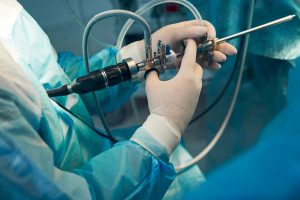
Endoscopic spine surgery refers to any type of spine surgery that is performed using an endoscope. An endoscope is a specialized medical tool that is composed of a long, narrow tube. The tube’s end is equipped with a light and a tiny camera. The endoscope is used to look inside the body, letting surgeons examine hard-to-reach areas without fully exposing them. Tools may also be passed down the tube to perform surgical procedures on the spine.
What Are the Benefits of Endoscopic Spine Surgery?
Endoscopic spine surgery is the latest development in minimally invasive spine surgery. By using an endoscope, spine surgeons can complete procedures without a large incision. This significantly reduces the damage caused to muscles and soft tissue. Because these muscles stabilize the spine, leaving them intact also allows successful treatments with less bone removal. This offers significant benefits, such as:
- Reduced post-surgical pain
- Lower risk of an infection
- Shorter recovery times
- Smaller scars
Minimally invasive spine surgeries have better success rates than open surgeries, meaning patients are more likely to experience positive results without complications. They also achieve those results faster with less pain, a shorter recovery, and a quick return to their normal lifestyles.
What Can Endoscopic Spine Surgery Treat?
Endoscopic spine surgery may be used to treat a variety of conditions. New breakthroughs are also on the horizon with the potential to make endoscopic techniques possible for more types of procedures. CNSO uses endoscopic surgeries for the following conditions:
Herniated Disc
A herniated disc, also called a slipped disc, occurs when a spinal disc becomes damaged. Spinal discs are gel-filled pads of tissue that provide shock absorption in the spine. When a disc’s exterior is weakened, its gel center creates a bulge that irritates nearby tissues. Endoscopic spine surgery for a herniated disc involves removing the parts of the disc that have bulged.
Degenerative Disc Disease
Degenerative disc disease occurs when a spinal disc deteriorates and becomes brittle. Over time, spinal discs gradually dehydrate and become stiff. The degenerated disc cannot absorb shock effectively and is vulnerable to damage. Endoscopic spine surgery for degenerative disc disease involves removing the disc and replacing it with a bone graft for a spinal fusion.
Spinal Stenosis
Spinal stenosis refers to a narrowing of the spinal canal. The spinal canal is the opening at the center of the spine that accommodates the spinal cord and nerve roots. Stenosis may occur for a variety of reasons, including thickened ligaments, bone spurs, or herniated discs. Endoscopic spine surgery for spinal stenosis involves removing bone, ligament, or disc material in order to widen the spinal canal.
Endoscopic Spine Surgery Consultation and Preparation
Before performing any endoscopic procedure, the CNSO spine surgery team performs a thorough evaluation. This step includes a physical examination, medical history review, and medical imaging with X-rays and MRI scans. It accomplishes several important goals, including:
- Ensuring an accurate diagnosis of the patient’s condition
- Determining whether a non-invasive treatment may provide relief
- Planning the surgery for greater precision and enhanced results
Once the surgery has been confirmed and planned, the CNSO team provides the patient with instructions for preparation. The patient may need to pause certain medications, including blood thinners, which can cause increased bleeding. They may also need to avoid food and drink before procedures that require anesthesia.
What to Expect on Surgery Day
On the day of surgery, patients should wear comfortable clothing that is easy to remove. Patients are asked to take off their clothes and put on a hospital robe on arrival at the hospital. The patient then lies down on an operating table. The patient may be asked to lie on their front, side, or back to provide the surgeon with the best angle to perform the surgery. Once anesthesia has taken effect, the surgeon performs these steps:
- The surgeon makes a tiny incision near the section of the spine to be operated on.
- The surgeon inserts the endoscope through the incision.
- Using precise tools, the surgeon removes bone or disc material from the spine.
- The tools and endoscope are removed from the patient’s body.
- The incision is closed with stitches and covered with a dressing.
Afterward, the patient is taken to a recovery room to wake up from anesthesia. Most endoscopic spine surgeries do not require an overnight hospital stay, though patients should plan transportation to avoid driving home after anesthesia.
Recovery from Endoscopic Spine Surgery
When patients are discharged from the hospital after endoscopic spine surgery, they are provided with instructions for recovery. Instructions may include keeping the incision clean, avoiding lifting or other strenuous activities, and rebuilding strength and flexibility with physical therapy. Most patients return to work within two weeks of surgery. Patients may return to sports and similar activities a few weeks or months later.
Schedule Endoscopic Spine Surgery Near You in New Jersey
Spine surgery does not always require a lengthy recovery. At Centers for Neurosurgery, Spine & Orthopedics, patients may receive endoscopic spine surgery for less pain and faster results. CNSO offers personalized and comprehensive treatment plans for patients at locations near you across northern New Jersey, including Bergen, Passaic, Essex, Morris, and Hudson counties. To learn more about care options or schedule an initial consultation, contact CNSO.
Frequently Asked Questions About Endoscopic Spine Surgery
How long does recovery take after endoscopic spine surgery?
Most patients who receive endoscopic spine surgery can return to driving, work, and other light activities within two weeks after treatment. Returning to sports and heavy physical activity can range from four weeks to three months, depending on your specific case.
How does endoscopic spine surgery compare to traditional spine surgery?
Endoscopic spine surgery causes less tissue damage and disruption than traditional spine surgery. This allows for less pain and bleeding, reduced risk of infection, and a faster recovery. Endoscopic spine surgeries also have better success rates than traditional surgery.
Am I a good candidate for endoscopic spine surgery?
Patients who are interested in endoscopic spine surgery can schedule an evaluation with a CNSO spine doctor. Detailed examination and an accurate diagnosis will help determine whether a patient is a good candidate for endoscopic surgery.

Our Medical Staff
In order to provide an accurate diagnosis with the most effective treatment option for “back problems” and brain tumors, CNSO is led by neurosurgeons and orthopedic spine surgeons. Under the care of our award-winning neurosurgeons and orthopedic spine surgeons, Northern NJ patients can have the confidence that their medical condition will be handled with consideration for their comfort and long-term well-being as well as technical excellence.
